The photos you see on social media of the Longsheng Rice Terraces usually show emerald green ribbons under a perfect blue sky. They rarely convey the humidity, the burning calves from climbing a thousand stone steps, or the logistical puzzle of getting a suitcase from the parking lot to a guesthouse perched halfway up a mountain. This region, often referred to as the Dragon’s Backbone or Longji, sits about two hours north of Guilin. It is stunning. It is also a complex destination that requires more planning than a typical day trip.
Navigating the Logistics of Transport and Luggage
Getting from Guilin to Longsheng involves a few distinct hurdles. Most independent travelers underestimate the transfer times. You might catch a direct bus from the Qintan Bus Station in Guilin, but these fill up quickly during peak seasons like the National Day holiday in October. If you miss the direct connection, you end up on a local bus that stops frequently, turning a two-hour drive into four.
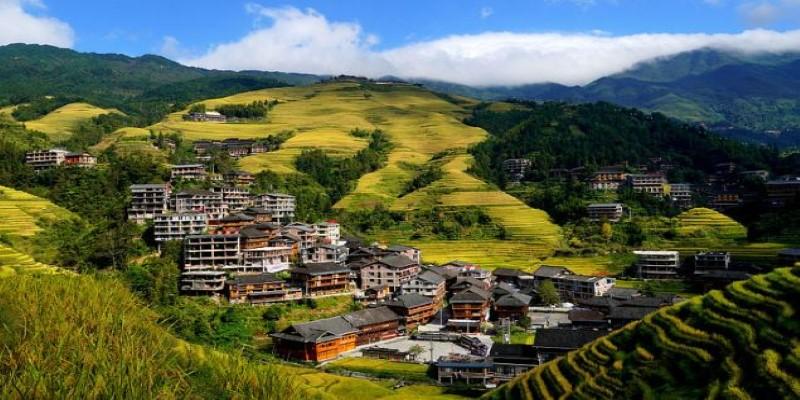
Once you arrive at the entrance of either Ping’an or Dazhai village, the road ends. Cars cannot enter the narrow village paths. This creates a specific bottleneck for travelers with heavy luggage. You will see local women with bamboo baskets on their backs offering to carry bags for a fee. This is not a scam. It is a necessary service. The walk to most guesthouses involves steep inclines and uneven stairs. Attempting to drag a wheeled suitcase up these paths is a mistake most people only make once.
For those booking trips for others, it is vital to communicate this "last mile" reality. Clients expecting a luxury drop-off will be disappointed. The infrastructure is rural. You are entering a working agricultural landscape that happens to have hotels, not a resort built for convenience. The local shuttle buses inside the scenic area run on a strict schedule. If you plan to stay past sunset to capture the evening light, you must stay overnight in the village. The last bus down the mountain leaves in the late afternoon. Missing it means paying a premium for a private driver to take you back to the city.
Choosing Between Ping’an and Dazhai for the Right Experience
The scenic area is split into different sections. The two most popular are Ping’an and Dazhai (Jinkeng). They offer completely different experiences and cater to different types of travelers. Confusing the two leads to mismatched expectations.
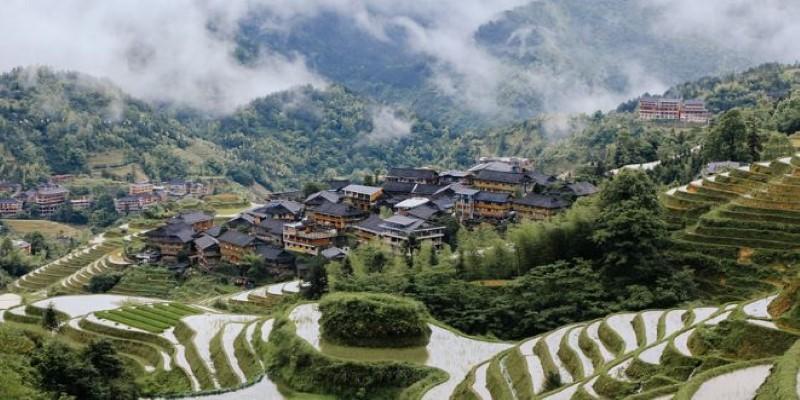
Ping’an is the older, more established village. Ping’an is smaller and easier to get around. The paths are well-kept, and most day-trippers and tour groups end up here. As a result, it feels more commercial. Souvenir stalls line the walkways, mixing mass-produced trinkets with locally made crafts. The famous “Seven Stars with the Moon” viewpoint is here. It’s easy to reach but often packed. If you’re pressed for time or have limited mobility, Ping’an is the safer choice.
Dazhai is bigger, wilder, and home to the Red Yao. Perched higher up the mountain, it now has a cable car that whisks you to Golden Buddha Peak, but the real charm—and the solitude most visitors are after—starts where the station ends.
The downside is distance. Dazhai sits deeper in the scenic area, so travel takes longer. Hotels are more scattered. A “terrace view” room might mean a forty-minute walk from the drop-off. Wooden guesthouses dominate; they look picturesque, but soundproofing is minimal. Expect to hear neighbors moving, talking, or packing. It’s a small but persistent detail often left out of brochures and frequently mentioned in reviews.
Managing Expectations for Weather and Seasonality
The rice terraces change appearance drastically depending on the agricultural cycle. A traveler visiting in March sees a completely different landscape than one visiting in September. This seasonality causes confusion.
Spring is when the terraces are irrigated. The water acts like a mirror, reflecting the sky. This is photographer bait. However, spring in Guangxi province is also the rainy season. Fog often rolls in thick and heavy. You can hike for an hour to a viewpoint only to stare into a wall of white mist. The stone paths become slick with moss and rain. Shoes with good grip are not optional; they are a safety requirement.
Summer brings the green phase. The rice grows tall and the hills turn a vibrant emerald. It is beautiful, but the heat and humidity are intense. Hiking in July involves sweating through your clothes within minutes. The mosquitoes are active. Most guesthouses have air conditioning, but power outages in these remote villages occur during summer storms.
Autumn is the harvest season. The rice turns golden yellow. This usually happens in late September or early October. This window is short. It coincides with the Chinese Golden Week holiday, resulting in massive price surges and booked-out hotels. If you miss the harvest, you arrive to brown, empty fields. The stubble remains, but the visual drama is gone. Winter brings occasional snow, which is rare and striking, but the maintenance of the terraces means the water is drained and the fields can look barren.
Travelers need to check the specific harvest dates for the year. The local government sometimes delays the harvest by a few days to extend the tourism window, but nature dictates the schedule. Booking a trip for late October often means missing the gold completely.
Conclusion
Visiting the Longsheng Rice Terraces is a highlight of Southern China, but it demands physical effort and patience. The views are earned. The experience relies heavily on timing your visit with the agricultural calendar and accepting the rustic nature of the accommodation. By understanding the logistics of the transfer, respectably engaging with the local economy, and preparing for the variable weather, you move from being a passive tourist to an informed traveler. The terraces are a testament to centuries of human engineering. Treat them with the complexity they deserve.